
Reviews
•9 min read
teamLab Biovortex Kyoto Review: Yes, It's Worth It (Here's the Proof)
You're going to walk out of this place genuinely unsure whether you were inside a building or inside a dream. That's the pitch. That's also just what happens.
The hidden alleyways of Gion, the serene matcha tearooms of Uji, and the timeless temples that define Japan's cultural heart.
You're going to walk out of this place genuinely unsure whether you were inside a building or inside a dream. That's the pitch. That's also just what happens.

Most people come to Fushimi for the torii gates and leave before they find the good part. The sake district — canals lined with willows, wooden brewery buildings that smell of

Kyoto's temples will blow your mind. Kyoto's food will ruin you for everywhere else. The city spent over a thousand years as Japan's imperial capital, and that history didn't just

Two world-class sights, one direction, zero backtracking — this is the southeast Kyoto walk that every itinerary should have and almost nobody does in the right order.

Kyoto charges you a small tax every night you sleep there. It's been that way since 2018. On March 1, 2026, that tax got restructured — and if you're staying somewhere nice, the

Ranked by one simple rule: would I actually go back? Because this stretch of Kyoto — stone lanes, wooden machiya, the faint smell of incense drifting down from Kiyomizu-dera — is

Arashiyama is the kind of place that makes you want to sit down and stare at something for a while — and thankfully, the cafes here are good enough to justify doing exactly that.

Gion earns its reputation on atmosphere alone — the cobbled lanes, the wooden machiya townhouses, the faint chance you'll round a corner and see a maiko (geisha apprentice)

Stay in Arashiyama if you want solitude at dawn and a slower pace that feels nothing like a city break. Stay central if you want to move fast, eat late, and reach every corner of
%2C%20Kyoto%2C%20Japan.jpg?width=1200)
Rent a machiya for a week if you want to understand Kyoto's architecture and daily rhythms. Rent for a month if you want to actually live here. Either way, you'll get more out of

Buying your groceries at Kyoto's oldest food market and cooking them in a 100-year-old wooden townhouse is one of the best evenings you can have in this city — and it costs less

These two imperial villas are the real Kyoto — not the postcard version, the actual one. Getting in requires a reservation, a little patience, and knowing which bureaucratic door
.jpg?width=1200)
Gion gets all the Instagram posts, all the tour groups, and all the tourists pointing cameras at women who are just trying to get to work. Meanwhile, four other hanamachi — "flower

Here's the thing about Fushimi Inari that nobody's Instagram post tells you: the famous orange tunnel at the bottom is just the lobby. The real shrine is a whole mountain. Most

Gion and Higashiyama are where Kyoto stops performing and starts being itself — and if you eat well and sleep in the right place, you'll understand the city in a way no amount of

One of the best two hours you'll spend in Kyoto costs less than a decent bowl of ramen — if you book it right.

Uji is the day trip Kyoto keeps almost to itself — and once you've been, you'll understand why people come back. Thirty minutes south by train and you're in a town that grows some

Do this hike. All of it. The people who stop halfway are missing the part that makes the whole thing worthwhile.

Arashiyama in late November is the kind of place that makes you stop mid-sentence and just stare — maples burning red above the river, mist sitting in the gorge, the whole mountain

Kyoto during Japan's big three holidays is the kind of trip people either love forever or swear off entirely — and the difference comes down almost entirely to preparation. The

Here's my honest take: the best version of Kyoto in summer isn't the one you plan around opening hours. It's the one you stay out late for — cormorant fires on the river, 8,000
September is Kyoto's early autumn — the season before the season. The summer visitors have thinned, the evenings are finally cool enough to enjoy, and you have the city largely to
August in Kyoto is spectacular and brutal in equal measure — and if you plan it right, you'll leave with one of the most memorable nights of your life.
Most families land in Kyoto, book three temples on day one, and spend day two bribing exhausted children through a fourth. This guide skips that. Here are the stops that actually
Rain in Kyoto is not a problem. It is, genuinely, one of the better ways to see it.
Kyoto sells better souvenirs than anywhere else in Japan — and also more decoys. Here's how to spend your money on the real stuff, ranked by how hard you'll kick yourself if you
You packed for two weeks. Kyoto's cobblestones did not get the memo. Here's how to ditch the suitcase before it ruins the trip.
Kyoto in winter reveals what summer crowds obscure — the gravel paths, the temple gates, the stone lanterns wearing snow like small hats, all of it finally visible without a tour
A whole traditional Kyoto townhouse to yourselves — no shared corridors, no hotel breakfast queue, no one shushing the kids — is one of the best things you can do for a family trip
Most first-timers make the same ten mistakes — all avoidable. Some are year-round traps; others only bite you during cherry blossom or foliage season. Either way, five minutes here
Five days is the sweet spot — long enough to breathe between temples, short enough that Kyoto keeps surprising you. This is for people who want the classics done right, not
Your neighborhood choice will make or break this trip — pick the wrong one and you'll spend half your days on a bus watching the good stuff scroll past the window.
Kyoto at 5:30 AM belongs to you. The gravel paths are raked and empty, the stone lanterns still glow, and the only other people at the torii gates are a few photographers and one
Kyoto in July is hot enough to make you question your life choices — and also the best version of itself. The city runs a thousand-year-old festival, strings paper lanterns over
Rent a whole century-old wooden townhouse in Higashiyama, wake up to garden light through shoji screens, and walk to Gion before the crowds arrive. These aren't hotels with a
A machiya — Kyoto's traditional wooden townhouse — gives you timber ceilings, a garden you can hear rain fall into, and the uncanny feeling that you actually live here. These four
Higashiyama is where Kyoto looks most like the city everyone pictures before they arrive — and it's where you should sleep.
Kyoto at night is a different city — quieter, sharper, and stripped of the tour-bus layer that coats everything before 6 PM. The stone lanes stop echoing, the lanterns do exactly
Skip it. For a Kyoto-only trip, the JR Pass almost certainly costs more than it saves.
Get this sorted before you land and you'll have Google Maps running before you reach the airport exit. Skip it and you're standing outside Fushimi Inari Taisha at 5:30am with no
Kyoto will not let you coast through on tap-and-go alone — but with the right three-layer setup, you'll barely think about money for the rest of the trip.
Kyoto will make you feel like a guest in someone's living room — because, in a very real sense, you are. Get the manners right and the city opens up. Get them wrong and you'll be
Kyoto pours better beer than you think — and most visitors walk straight past it on the way to the sake counter.
Peak Kyoto is crowded in a way that makes Times Square look relaxed — but the locals figured out how to live alongside the chaos, and so can you. Two days is tight. You won't see
Kyoto will humble you. Not in a bad way — in the way a city does when it's been doing things right for a thousand years and doesn't need your approval. Go unprepared and you'll
A private machiya hands you the whole house — your own garden, your own kitchen, your own slice of Kyoto that nobody else has a key to. Whether you're planning a honeymoon, an
A machiya gives you something no hotel room can: the feeling that Kyoto actually belongs to you for a few days. You have a front door key, a wooden house that's older than your
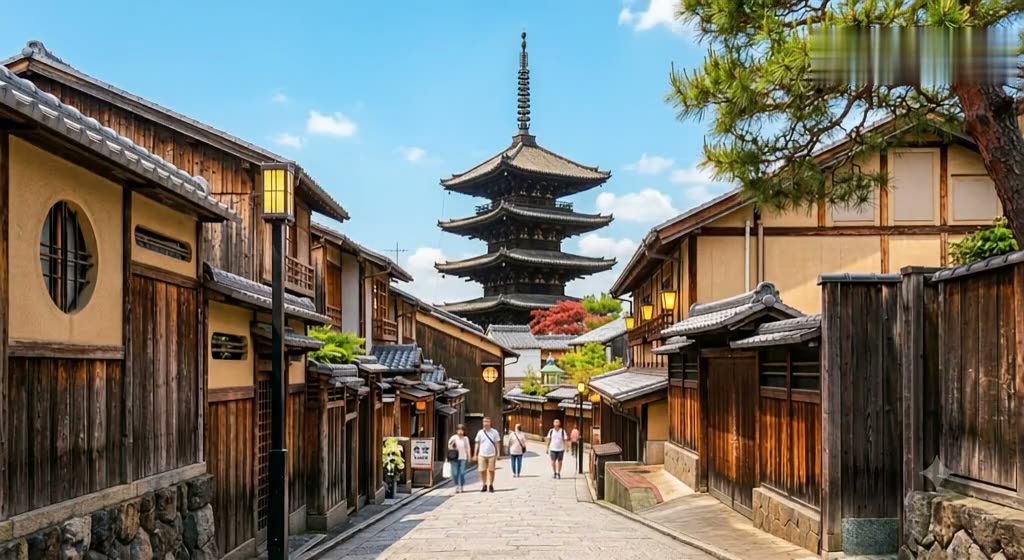
If you only get one neighborhood right in Kyoto, make it this one. Higashiyama is where the old city actually survived — stone lanes, wooden shopfronts, pagodas poking above the
This is the part of Kyoto where the night actually gets going. Two subway lines, a thousand restaurants, one impossibly atmospheric alley, and zero excuses to eat badly.
Kyoto has two subway lines, multiple train operators, and a bus network that reaches every corner of the city — all for fares that make a London Tube ride look expensive. Learn the
Southern Higashiyama is the part of Kyoto you picture before you ever book a ticket — wooden stages jutting over hillsides, geiko slipping into doorways, stone lanes that look lit
Kaiseki is Kyoto's most elaborate, season-obsessed multi-course meal. It's the reason food lovers plan entire trips around a single restaurant reservation — and once you've had one
The shinkansen gets you from Tokyo's neon energy to Kyoto's quiet temples in just over two hours. No airport security lines, no baggage-claim roulette — just a smooth train ride
The Arashiyama Bamboo Grove is a 400-meter hallway of absurdly tall stalks that somehow convinces you it's a forest. It's also one of the most beautiful, over-photographed, and
Blame the tax man. Kyoto's traditional townhouses look like a hallway that kept going because, for centuries, the city charged property tax by street frontage, not total floor
A 35-minute train ride from Kyoto puts you in places that feel like completely different worlds — deer that bow for biscuits, tea that's been ground for 800 years, and a castle so
You came to Kyoto for the temples, but the real trip starts the morning you skip them. Book a machiya — a traditional wooden townhouse — and you trade a hotel room for a whole
Kyoto's most famous sights are wonderful — and so crowded they can feel like a theme park. The trick is sleeping in a quiet neighbourhood, waking before the buses arrive, and
Kyoto's geiko and maiko aren't museum pieces in silk — they're working artists, and if you know when and where to look, you can see them without turning into the kind of tourist
The room you sleep in shapes your trip more than any temple guidebook. A hotel gets you moving fast. A machiya gives you a century-old townhouse with your own garden. An Airbnb
Staying in a machiya is the most direct way to experience the Kyoto of a century ago — not through a glass case, but with your own key. It’s a traditional wooden townhouse,
Ranked by historical significance, accessibility, and sheer visual impact — the spots that make you feel like you've stepped into a different century. These are the ones worth the
The fastest way to central Kyoto is the JR Haruka Limited Express — 75 minutes, direct, and under ¥3,000 if you know which ticket to buy. If you'd rather skip the train station
Arashiyama is Kyoto's greatest hits album — you already know the bamboo, the bridge, the monkey selfies — but the deep cuts are what actually make it worth sleeping over.
Gion is Kyoto's most famous geisha district, a compact walkable neighborhood where preserved wooden machiya townhouses line flagstone lanes and the sound of shamisen practice
First-timers should choose between three neighborhoods: Downtown for nightlife and food, Southern Higashiyama for temples and old-Kyoto atmosphere, or Kyoto Station for train
One day in Kyoto isn't enough, but this route delivers the essentials: Higashiyama temples, Gion's lantern-lit lanes, Nishiki Market, and Fushimi Inari's red gates. Mostly on foot,
You land in Kyoto with three days and a list of temples longer than the bullet train you rode in on. This plan cuts the noise. You'll walk the old streets of Higashiyama, stand
A tight day in Kyoto costs ¥7,000–10,000 — that's a dorm bed, three street-food meals, a couple of subway rides, and a temple fee. Scale it to ¥12,000–15,000 and you've got a
Three full days. That's the short answer. With three days on the ground you can hit the heavy-hitters, eat your weight in street food without a panic, and still find time for a tea
This guide covers exactly when to go, where to stay, what to eat, and a working three-day itinerary — no fluff, no "you should see everything" nonsense.
Come mid-November, Kyoto's maples shift from green to crimson, and the show lasts well into early December — a generous three weeks compared to the cherry blossoms' fleeting
Kyoto's cherry blossoms peak between late March and early April. According to the 2026 forecast from the Japan Meteorological Corporation, first bloom is expected around March 25,
Here's the short version: Kyoto is good year-round, but the two weeks that everyone fights over are early April for cherry blossoms and mid-to-late November for the leaves. Pick
Join our curated mailing list to receive seasonal updates, hidden culinary gems, and cultural reflections directly to your inbox.